NEWS
About Us

Architects and Planners for Justice in Palestine
UK architects, planners and other construction industry professionals campaigning for a just peace in Israel/Palestine.

DATABASE & REPORTS
Wednesday
Sep112013

Fear and loathing in Upper Nazareth

http://www.haaretz.com/news/features/.premium-1.540773

By   11 August  2013  Haaretz

Arab and Jewish residents respond to Mayor Shimon Gispo, who is determined to keep his town predominantly Jewish.

Shimon Gapso - Ilan Assayag

Upper Nazareth Mayor Shimon Gapso in court on Dec. 27, 2010. Photo by Ilan Assayag

Ghanem Mahroum, 60, from Nazareth, very much wants to move to the neighboring city, Upper Nazareth. "I feel better here; in our city there's a lot of crime, noise, and our municipality is not good enough. I'd be happy to live with Jews. If I have enough money I'll move here." His son, who is a lawyer, is already about to make the move from Nazareth to Upper Nazareth.

Mahroum is a boxing coach in his town and owner of a café in Upper Nazareth. Two days ago he went from one place of business to another in Upper Nazareth, posting notices about an international boxing competition to take place 10 days from now in Nazareth. Teams from Austria, Hungary, Germany and Israel will be participating. "Since I was a young boxer I've always been proud to represent Israel. The State of Israel is a good country that allows its citizens to advance and develop. It's a shame that a man like [Upper Nazareth Mayor Shimon] Gapso comes with his pronouncements and spoils the atmosphere. I think that he should get a lot of practice before he re-enters the election arena because the way it looks to me, in the next round he's going to suffer a knockout."

With two months to go before local council elections, the Upper Nazareth mayor succeeded last week in dictating the agenda. For him, the main issue is relations between Jewish and Arab residents of town. His campaign, which began about a week and a half ago, features posters with pictures of leftwing MKs Ilan Gilon (Meretz), Haneen Zoabi (Balad) and Ahmed Tibi (United Arab List-Ta'al) and quotes they have made in the past against Gapso. Later the posters were removed and replaced by Gapso's replies, such as the sign "Upper Nazareth will be Jewish forever; no more shutting our eyes, no more clinging to the law allowing every citizen to live wherever they want. This is the time to protect our home."

"There's a war atmosphere in the city," said an Arab business owner who requested anonymity. "This time things have reached a climax, but there have been statements against us for a long time and they are already creating a bad atmosphere here." He claimed that as a result of that atmosphere his young son was humiliated and harassed in his kindergarten. "Other children called him a 'stinking Arab,' among other things, and we had to take him out of the kindergarten [in Upper Nazareth] and transfer him to one in Nazareth."

Gil Eliahu

A view of Upper Nazareth. Photo by Gil Eliahu

Attorney Sari Khoury, an Upper Nazareth resident, also says: "Our mayor wants us, the Arabs, to feel inferior in this city. He's quite a provocateur who makes sure to emphasize again and again what a racist he is." At the same time Khoury emphasized that "On a daily basis, I would describe my neighborly relations with the Jews as very good. There really is no difference in my relationship with a Jewish or an Arab neighbor."

Khoury's Jewish neighbors in the Hakramim neighborhood in northwest Upper Nazareth constitute a minority in a neighborhood where the Arabs are the vast majority. It's a spacious neighborhood of private homes whose residents are independent professionals: doctors, lawyers etc. An Arab resident of the neighborhood who asked not to be identified by name has been living there for 24 years. Only a road separates Hakramim from Nazareth, but "the conditions here are far better," she says. "In Nazareth, there's chaos."

She was not perturbed by the uproar of recent days and dismissed it. "I love the city and the country, and there are racists everywhere. All I want is to live in peace and quiet," she said, but she admitted that members of her family, including her adult children who are university students, are disturbed by the issue.

No demographic plot

Dr. Ra’ed Getas has lived in Hakramim for 26 years, having moved to Upper Nazareth from the Arab town of Rama after being appointed head of the Ear, Nose and Throat department at the Holy Family Hospital in Nazareth. He is one of the two Arab representatives on the city council (which has 17 members) for the Arab Joint Party for Coexistence, a local merger of the Hadash and Balad parties. He expects the party to win three or even four seats in the coming election.

"Every Arab resident came to Upper Nazareth for his own reasons. After all, it's a basic right of every person,” says Getas. “There's no big plan here to bring about a demographic revolution.”

According to Getas, the Arab population of the city can be divided into four groups: residents who lived in the area where Hakramim was established even before the area was annexed from Nazareth to Upper Nazareth in 1957; those who came due to a housing shortage in Nazareth and the other Arab communities in the area; people of means – engineers, doctors and others – who wanted to live in a modern city that meets their needs; and a small group, on a lower socioeconomic level, composed mainly of widows and divorcees who wanted to get away from their old milieu.

Five years ago there was a different atmosphere in the city: Getas and his partner on the Arab list, Dr. Shukri Awada, were the first to sign a coalition agreement with Gapso. At the same time Gapso appointed an Arab resident as an adviser on Arab affairs. Getas says that in return for their support they were promised that a committee would be formed to help establish an Arab school in the city, but he says that the promise was broken and after they left the coalition the anti-Arab statements steadily increased until peaking in recent days.

Gapso claims that his actions are based on his desire to preserve the Jewish character of the city. "Anyone can come to live here, but he should be aware that it's a Jewish city, just as the State of Israel is a Jewish state. The demand to open an Arab school does not come from a genuine need - after all, most of the Arabs students from Upper Nazareth study in private schools in Nazareth. What they want is to hoist a flag and change the character of the city."

Gapso is very happy watching the Israeli flag flutter. "That's a breeze that's worth a picture," he said at the sight of the wind blowing a huge Israeli flag, one of seven that he has placed around the city. One of them is at the entrance to Hakramim, near Getas' house. The cost of maintenance, mainly replacing the flags that become tattered from the wind, in addition to the cost of installing the huge flagpoles, is thousands of shekels per month.

A new Haredi neighborhood

During the years of Gapso's tenure, which began in 2008, the Arab population of the city has grown from 15.2 percent to 19 percent, according to the Central Bureau of Statistics. Before the number reaches 20 percent, Gapso promises to carry out his plan to bring 3,000 Jewish families to the new ultra-Orthodox neighborhood of Har Yona Gimmel.

Gapso considers the project his baby, and in recent years he has worked energetically among the ministers of the Haredi parties to promote construction of the neighborhood as a way to prevent the city from becoming a mixed Arab-Jewish city. He realized that his attempts to change the name of the city to Lev Hagalil, Kokhav Hagalil or Hod Hagalil (Heart of the Galilee, Star of the Galilee, Glory of the Galilee, respectively) and decorating the streets with Stars of David on the lamp posts, large Hanukkah menorahs on the holiday and other Jewish symbols, are not enough to change the demographic situation.

The city of Upper Nazareth is basically secular. About half of its residents are immigrants from the Former Soviet Union, and on Shabbat there is public transportation. Gapso has declared in the past (on the website of the Halamish – Haredim for Judea and Samaria settlers) that "quite a few people in the city, especially the Arabs, don't like it [the establishment of the Haredi neighborhood] to put it mildly. But the facts speak for themselves and most of the population, even the secular community, knows that Haredim are preferable to Arabs."

Shahar, a resident who recently finished his army service, identifies with the mayor. "When Menahem was mayor [Menahem Ariav, who was the mayor of Upper Nazareth for 32 years] the situation was ideal. I don't want Nazareth and Upper Nazareth to intermingle. We aren't welcome in Nazareth, while they come here, drive through the street, honk at a girl and she gets into the car. Shimon is doing good work, but I still don't understand whether he is for or against an Arab school."

Shahar is standing at the entrance to a store in a shopping center in the southern part of the city, whose residents are immigrants from the former Soviet Union, veteran Israelis and an Arab minority. Most of the stores are empty. While in the commercial center adjacent to Hakramim they speak mainly Arabic, in this center the prominent language is Russian. Shahar notes that he has four Arab neighbors “who are good, quiet neighbors who live their own lives. But suddenly, since Shimon was elected, more and more Arabs are coming to the city." He says that among the Jewish population "the city is becoming a senior citizens' home. The young people are leaving for the center or for Haifa and the Krayot [Haifa's satellite cities]."

But he and his mother, who joined the conversation, said that "If Shimon isn't elected the city will become a city with an Arab majority. Shimon knows how to hold his own against those who are slandering him. He's an honest man ... who’s interested in your welfare, knows the residents and respects them. The problem is that he doesn't receive support and they bother him all the time."

Along with the anger at "the daily shootings from Nazareth, with a bullet even fired into our house once, and the call of the muezzin at 4 A.M.," what bothered the Shahar and his mother most was the feeling that his future in the city is unclear. "The young people are leaving because there are no places of entertainment here and there's no work. If you find work here at a salary of NIS 4,000, say thank you." Shahar is already planning the trip to the Far East, followed by studies that will take him out of the city, in search of a better fuiture.

The Rassco Commercial Center, which was built 50 years ago and was last renovated 20 years ago, looks neglected, but has more customers. Dollar stores (which sell everything for two shekels) are an attraction. Shortly before Eid al Fitr (the three-day festival marking the end of Ramadan) many Arab families have come to shop. Michael Tomasis, owner of a falafel stand in Rassco for the past 50 years, understands "the minorities who didn't come here to conquer the city, but just want a better quality of life. In Nazareth they were suffocated; there's nowhere to build there, so they come here. They didn't come here to occupy us."

But as one of Gapso's known supporters he claimed that "they didn't understand his statements; he has nothing against them, but he's not ashamed that he wants Upper Nazareth to be a Jewish city. He respects them and gives them fair and equal treatment. The relations in the city between Arabs and Jews are excellent."

Moshe, who is eating at the falafel stand, said that he came to the city from Jerusalem in the late 1970s "in order to Judaize the Galilee." According to his theory "Everyone is wrong. Shimon loves Arabs and their situation improved during his tenure, and because he's worried about this image among the Jews, it's as though he's saying: 'Look what the leftists are saying about me.' The strong population has left Upper Nazareth, and his campaign is geared to the weak population that remained here, including Russians who like a strong leader like Putin. But his talk will actually cause an Arab school to be opened here in another two years rather than in another 20."

 

Monday
Aug122013

We can’t lose a democracy we never had

http://www.haaretz.com/opinion/.premium-1.539584

The illusion of democracy in Israel is just one of the many illusions that we Israelis have been educated to believe.

By Tsafi Saar    4 Augist 2013       Haaretz

An IDF soldier with Palestinians

An IDF soldier with Palestinians: Abrogating rights and freedoms. Photo by Emil Salman

Many dirges have been heard lately lamenting the death of democracy on account of the governability law that passed its first reading in the Knesset this past week. There is reason to lament; it is indeed a bad and dangerous piece of legislation. But for something to die, it must have once lived. Has there been democracy in Israel before the governability was passed? The answer is no. For Israel's entire 65-year existence it has not been a democratic state. From its founding until 1966 Israel imposed martial law on the Arab communities in its territory. Since the occupation of the West Bank and the Gaza Strip in 1967 until today, Israel has ruled over millions of Palestinian inhabitants in these territories – an occupied population with its basic freedoms and rights abrogated.

There has been an illusion of democracy here, or alternatively, a democracy for Jews only. This of course is a contradiction in terms. This is just one of the many illusions, which we Israelis have been educated to believe. It isn't easy to discover how much of life and education here are full of indoctrination, because lightly scratching the surface reveals what is just a cover for an entirely different reality. Some of us discover this at an early age, others later. There are also those who will never discover this, perhaps they would even prefer not to see it.

Among the prominent examples are myths like "making the desert bloom," or the statement, "A land without a people for a people without a land" - basic concepts in Zionism that express a worldview that ignored the land's inhabitants. There is "Hebrew labor," the aspiration that Jews who settled the land would work with their own hands instead of managing others, which is perceived to be something positive until we understand that it means excluding native Arabs from work. Another phenomenon placed on a pedestal is the revival of the Hebrew language. While it was a blessed miracle, it also was enabled by the pushing aside of many other languages as well as other cultures, not infrequently with violence – and this already sounds less heartwarming.

There are also clichés like "our hand is outstretched in peace," as our politicians are wont to say while they are still polishing up ruins. In other versions, still in use today, there are mantras like "no partner for peace." And who can forget "the world's most moral army"? The same army that just recently detained a 5-year-old Palestinian child for investigation, and the state that plans to evict 1,300 Palestinians from their homes in the south Hebron hills to save time and resources, just to mention two examples among countless others.

These are bothersome thoughts. Is it possible that everything we were raised on, or at least most of it, is mistaken? What is the significance of this? And does asking these questions undermine the fact of our existence of here? If our existence here must be based on a strong fist, on pushing out others, on nationalism, chauvinism and militarism, then the answer is yes. But is this really the case?

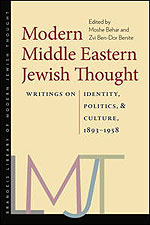
In the history of Zionism there were other options besides that of Ben-Gurion-style force. For example, the path shown by professors Zvi Ben-Dor Benite and Moshe Behar in their recently published book "Modern Middle Eastern Jewish Thought: Writings on Identity, Politics, and Culture." Jewish intellectuals of Middle Eastern origin at the beginning of the 20th century warned against adopting a European arrogance to the land's inhabitants and called for respectful dialogue with them. But their words fell on deaf ears. The Brit Shalom faction of Hugo Bergmann and Gershom Scholem also proposed another way in the 1930s that was not accepted.

The state established here was not, despite its pretensions, "the sole democracy in the Middle East." It appears that the first condition for really fixing this situation, if that is still possible, is the recognition that we did not lose democracy now. It never resided here.

*******************************************************************************

      
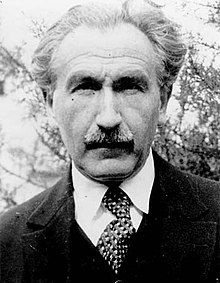
The path not taken; Left, Hugo Bergmann co-founder of  Brit Shalom, 1925-48,  which  advocated “dual-national” areas where Jews and Arabs could live under equal conditions. Right, Zvi Ben-Dor Benite, co-author of a book on modern middle-eastern Jewish thinkers who warned against Jews adopting “a European arrogance to the land’s inhabitants”.

Notes and links
Brit Shalom (Covenant of Peace)
Founded in Palestine in 1925 as a pressure group for peaceful coexistence between Arabs and Jews to be achieved by renunciation of the Zionist aim of creating a Jewish state. It advocated a bi-national state. Henrietta Szold , Arthur Ruppin, Martin Buber, Hugo Bergmann, Gershom Scholem, Albert Einstein and Judah Magnes were among their members or supporters.

From The History of the original Brit Shalom, founded 1925

“If we do not give every member of the public the opportunity of considering the Jewish-Arab question, we will be committing, I think, an unpardonable sin. Why do I think so? For two reasons. First: it was Judaism, which brought me to Zionism and I cannot but believe that Judaism, Religion as I understand it, is our moral code; and Judaism bids us to find a way in common with the Arabs living in this country. Secondly: I am almost certain that at the end of the war it will not be easier that it is now to shape the development of our life in the way we desire by bearing our influence on those who determine the course of affairs. The more I return to this matter, the more do I become convinced that politically as well as morally, the Jewish-Arab question is the decisive question. I insist that we must reach an understanding of this question, and we can succeed in this only if we are offered opportunities of meeting and discussing the matter. I think that even at this late hour we must endeavour, through IHUD, to find ways of speaking and conferring about this question with clear insight and full knowledge of its importance. And that paragraph of national discipline printed on the Shekel cannot deprive us of the right to speak and understand.”
Henrietta Szold (1942)

Modern Middle Eastern Thought: Writings on Identity, Politics, and Culture, 1893–1958, Edited by Moshe Behar and Zvi Ben-Dor Benite
Published by Brandeis University Press and University Press of New England, 2013

Blurb from The Tauber Institute, Brandeis university

Modern Middle Eastern Jewish ThoughtMoshe Behar and Zvi Ben-Dor Benite present Jewish culture and politics situated within overlapping Arabic, Islamic, and colonial contexts. The authors invite the reader to reconsider contemporary evocations of Levantine, Mizrahi, and Arab Jewish identities against the backdrop of writings by earlier Middle Eastern Jewish intellectuals who critically assessed or contested the implications of Western presence and Western Jewish presence in the Middle East; religion and secularization; and the rise of nationalism, communism, and Zionism, as well as the State of Israel.


Wednesday
Jun052013

Let the sunshine in: Jerusalemites to oppose new skyscrapers

http://www.haaretz.com/news/national/let-the-sunshine-in-jerusalemites-to-oppose-new-skyscrapers.premium-1.527866

by Nir Hasson          Haaretz         5 June  2013

Jerusalem skyline to reach new heights when zoning board approves two 34-storey towers; local residents expected to submit objections to construction plans.

An artists’ rendering of the two 35-story towers.

An artists’ rendering of the two 35-story towers that have been approved for the western entrance to Jerusalem.Photo by Farhi Zafrir Architects


The Jerusalem Regional Planning and Building Committee is expected to approve on Thursday a plan to construct the two highest buildings in the capital.

Each of the two towers, which will be at the western entrance to the city, will be 34 stories high. They will contain space for hotels, offices, commercial and other uses.

The debate over high-rise buildings in Jerusalem is almost as old as the city itself. For years residents, environmental organizations and architects have objected to towers in the capital, on the grounds that they would destroy Jerusalem’s unique, historic skyline.

The residents of nearby buildings are expected to submit objections, since the planned towers will block off much of their natural light.

The various plans to build such towers over the years have always brought with them major battles. In the days of the long-serving mayor Teddy Kollek guidelines called for a ban on buildings over eight stories, except in special cases.

But there were many special cases; the cityscape came to be altered by tall buildings that won approval after bitter battles.

But the new plan for a major jump in height at the city entrance has so far proceeded with little opposition. In the past several years environmental organizations have decided to focus their attentions on fighting the city’s incursion into open spaces, rather than battling high-rise construction.

Under Jerusalem’s new master plan the area at the entrance to the city is designated as the new center for business and commerce. The fast train from Tel Aviv to the capital, now under construction, together with the two light-rail lines, will enable the development of a “city” with a concentration of towers, city planners say.

The first two buildings of this new complex to be approved are at the intersection of Jaffa and Herzl streets, and will reach a height of 150 meters. By comparison, the round tower of Tel Aviv’s Azrieli Center is 187 meters high. The new Jerusalem towers will have five levels of underground parking and 78,000 square meters in total floor space.

The Israel Lands Administration is developing the project, which Farhi Zafrir Architects is designing.

The main problem with the towers is their shadows, according to the environmental opinions submitted to the zoning board, which will reach for hundreds of meters on the ground and affect most nearby buildings and streets.

But others question the need for what they say is a grandiose project.

“The problem with the plan is that it creates a precedent for such tall buildings,” said city council member Rachel Azaria, adding, “After approving such a building, no developer in the area will ask for less than 35 stories.”

Continuing, she said, “It is possible the building will integrate into the fabric and the skyline, but it is reasonable to assume there will also be problems with such massive construction. That is why it is proper to start with a much lower building, of 12 or 18 stories, to see how it goes and then to move on to plan such tall and massive construction.”

“Jerusalem is a city that demands caution and modesty in planning, and that is not happening in this building. I hope the regional [planning] committee will learn to significantly reduce its height,” said Azaria.

-----------------------------------------------------------


Wednesday
Feb132013

Israel unveils Herod's archaeological treasures

http://www.guardian.co.uk/world/2013/feb/12/israel-archaeological-exhibition-herod-the-great

Herod's mausoleum headlines Israel's most ambitious archaeological show but Palestinians say treasures should stay where they were found

 in Jerusalem   12 February 2013

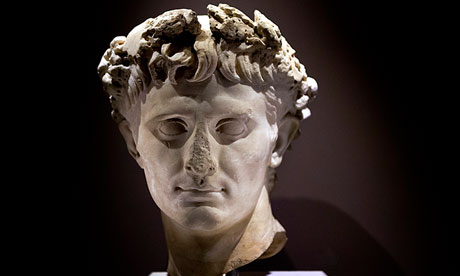
Roman emperor Augustus, who ruled at the time of Herod the Great in the Israel Museum exhibition

A stone sculpture of the Roman emperor Augustus, who ruled at the time of Herod the Great – part of the Israel Museum exhibition. Photograph: Jim Hollander/EPA

A magnificent mausoleum in which King Herod the Great, the biblical-era ruler of Jerusalem and the Holy Land, was laid to rest at the end of his 37-year reign of terror is the centrepiece of the most ambitious archeological exhibition ever mounted in Israel.

Herod's burial chamber, discovered less than six years ago after a 40-year search, has been reconstructed within the Israel Museum in Jerusalem for the first ever exhibition to focus on the murderous king. Thirty tonnes of artefacts were excavated from the site of the tomb, the desert palace of Herodium, situated near the West Bank city of Bethlehem, for the eight-month show, Herod the Great: The King's Final Journey.

During his bloodthirsty tyranny, he executed at least one of his wives and three of his sons as well as countless rabbis, opponents and people who simply got in his way. According to Matthew's gospel, he ordered the killing of all newborn babies following the birth of Jesus, although some scholars say his son, also called Herod, was responsible for the butchery (and others dispute it happened at all).

An ornate red flower-carved sarcophagus, believed to be Herod's, which was discovered smashed into rubble, has been painstakingly pieced together for the exhibition. In total, around 250 archaeological finds are on display, alongside models and graphic displays of his palaces.

Herod's death at the age of 70 followed an excruciating illness. According to Simon Sebag Montefiore, "Herod collapsed, suffering an agonising and gruesome putrefaction: it started as an itching all over with a glowing sensation within his intestines, then developed into a swelling of his feet and belly, complicated by an ulceration of the colon.

"His body started to ooze clear fluid, he could scarcely breathe, a vile stench emanated from him, and his genitals swelled grotesquely until his penis and scrotum burst out in suppurating gangrene that then gave birth to a seething mass of worms."

His body was taken from Jericho to Herodium to be entombed on his man-made mountain. The mausoleum was discovered in May 2007 by Ehud Netzer, an Israeli archaeologist who had devoted his career to searching for it.

Three years later, during the first visit to the site by the Israel Museum's curators and restorers, Netzer fell to his death after leaning on a barrier. The exhibition is dedicated to his memory.

The show has met with opposition from the Palestinian Authority (PA), which says Israel is in breach of international law by exhibiting artefacts excavated and removed from the West Bank.

Hamdan Taha, a PA official responsible for antiquities, said the Israel Museum had not consulted it on the excavation and exhibition. Herodium is located in Area C of the West Bank, which is under full Israeli control, and the site is administered by the Israeli Parks Authority.

The exhibition was an attempt to use "archaeology to justify Israel's political claims on the land", Taha said. The site, along with Jericho, was "an integral part of Palestinian cultural heritage", he added.

The Israel Museum said that Israel was given temporary control over archaeological sites in the West Bank under the 1993 Oslo accords, and that the museum had co-ordinated with the Israeli Civil Administration, which governs Area C.

"We have this material on loan, and it will be returned to the site after the exhibition," said James Snyder, director of the Israel Museum. "Everything is here on an authorised basis. If we had left [the artefacts] as they were, there was no way of understanding or interpreting them. We are not about politics or geopolitics; we are trying to do the best and the right thing for the long-term preservation of material cultural heritage."

Yonathan Mizrachi, of Emek Shaveh, an Israeli organisation that focuses on the role of archaeology in the Israeli-Palestinian conflict, said international law did not permit the removal of artefacts from occupied territory. Excavated material "should be kept in the West Bank and [Palestinian] residents must have access".

The exhibition, he added, would have "a major political effect on Israeli public opinion about Jewish heritage and will strengthen claims to the land".


Tuesday
Feb122013

Why the Bible doesn’t give Israel a claim to the West Bank

http://electronicintifada.net/blogs/alice-bach/why-bible-doesnt-give-israel-claim-west-bank?utm_source

Submitted by Alice Bach on Mon, 12/10/2012 - 08:26

Israel was an anachronism from day one.        (Nedal Shtieh / APA images)

Having a passport stamped with the names Judea and Samaria reminds me of a trip my family made to Disneyworld, where I got a passport stamped Neverland.  That day I met Peter Pan and Wendy. Getting my passport stamped for the West Bank these days, I can hope to stand before the graves of Biblical characters in Samaria and Judea. 

What actually can we glean about the area of Samaria from the Hebrew Scriptures? Samaria was a region in the land of Israel with geographical limits that were never clearly defined in the Bible. Originally it was the territory of the tribe of Ephraim and half tribe of Manasseh: its eastern boundary was the Jordan River, the western boundary was the Mediterranean coast. Not surprising since natural boundaries, such as mountains, rivers, deserts, or lakes formed boundaries long before they were hand-drawn by the winners of wars. 

After the campaign of Tiglath-Pileser III in 732 BC, Samaria became a province of the Assyrians. The Biblical authors understand this loss of the Northern Kingdom (Samaria) as God’s punishment of his people for worshipping other deities and breaking the Covenant that had bound them to God. “And the king of Assyria did carry away Israel [Samaria] unto Assyria and put them in Halah and in Habor by the river of Gozan, and in the cities of the Medes” (II Kings 18:11).

The triumphant Assyrians settled some of their subject populations there and in Syria to mingle with the Palestinian people. The Hill Country of Samaria remained a province during the Persian period. Then, Samaria, along with Judea, became the property of the Babylonians, from 539 until 333 BC, and subsequently was ruled by the Hellenistic Greeks, and then the formidable Roman Empire. The land was never owned by the Jewish people, except in minds that were nourished by the Biblical narratives.

Israel’s history of salvation

Why am I providing such specific historical data for these vague geographical areas? Because there has always been an intertwined narrative between Israel’s religious history and a so-called objective history that must be maintained. To reject the historicity of Israel’s salvation history has been considered an attack on the faith itself. A fundamental basis of Biblical faith is that, unlike other ancient deities living in some faraway realm, the Israelite God acts within history, prodding and protecting his chosen people from the threats and attacks of its enemies. When Israel breaks its Covenant with God, the land and the power revert to their enemies, often for as long as 400 narrative years of repentance. Then God relents. What could reassure Israelis of the historicity of the biblical narratives, and their everlasting bond with God, more than actual physical proof that they earned every hectare of land from righteousness. Stepping right out of the pages of the Bible, today’s faithful can flash that Biblical truth in the form of a current passport stamp. Samaria and Judea.

What better way to prove the veracity of the events narrated in the Bible than by discovering tangible, visible proof embedded on shards, stele, inscriptions and other archeological treasures. So with the Bible in one hand and a shovel in the other, Western and Israeli archeologists began to dig up the Holy Land to prove the land holy. Official versions of a nation’s past are commonplace: think of Columbus discoveringAmerica. But what is different about the attempt to recover the history of ancient Israel is that this history has been shaped in the context of the modern European nation state. It has been translated and interpreted as the history of a united group of people, divided into tribes. There are no other people except for enemies, the generic “Canaanites.”

A different kind of salvation

In the past 25 years, scholars have begun to argue, following the lead of Niels Lemche of the University of Copenhagen, that the gap between the first written fixation of the Biblical texts, beginning some time after the Exile in 587 BC, and the occurrence of these events is too great to accept the tradition as a primary source for the reconstruction of the Israelite past. Why is this statement so central to our continuing study of this land today? Because it frees the Western scholarly “search for ancient Israel” to examine the history of the entire region, including the all-important search for a Palestinian history that has been overshadowed, intentionally erased, by those who ignored the social history of the indigenous people of Syro-Palestine.

In her important book Facts on the Ground (2002), anthropologist Nadia Abu El-Haj argues that the strong Zionist collective memory has been strengthened by the Eurocentric model that created the cultural construction of Orientalism, the Western depiction of Arab cultures with all its negativity. Since the first-generation of Israeli archeologists came from Europe, they saw through eyes trained by the last generation of scholars of the continental empires. Like all subject peoples, the hope of these Jewish archeologists was to create and privilege their national “ethnic” majority over the indigenous people of Palestine. To create a visible ancient Israel has resulted in dismissing the large Canaanite mounds. In searching for Judea and Samaria, these archeologists have shown little interest in the lowlands, understood to be Canaanite.

Thus, during the British Mandate period, these archeologists set out to create and preserve a solid historical link from the Biblical narratives to the world of the Zionists. A new nation set to work to revive the old Biblical history from every hillside and wadi. By the time of the 1967 War, the continuum between the past and the present, linking the modern state of Israel to the intentional creation of ancient Israelite history, had been forged. Even tourists visiting the State of Israel could visit Rachel’s tomb, breathe the air in the cave of Machpelach, which Abraham had purchased as a tomb for himself and Sarah. I have been shown the very well the Bible says Abraham dug to water his flocks. Not to be a spoil sport, but these Biblical characters survived in story form through a minimum of 800 years of oral transmission before their stories were ever written down. And one can still find a well dug by a mythic patriarch?

Finally the Zionists have their modern state, theirs by means of an ancient tradition superimposed on a Western nation-state model. And the West, lead by the United States, has displayed no inclination to question the eradication of Arabic place names, that the Zionists have replaced with Biblical names. Comfortable with the celebration of Biblical values ascribed to our own national cultures, how could we not have been Israel’s natural allies? Only recently have historians begun to argue in impressive numbers that the problem with the historical model of ancient Israel is that it denies validity to any attempt to produce a history of ancient Palestine. Zionist allies have allowed Israel to play the largest board game in the world. But the roll of the dice is getting more dangerous for Israel. 

As Tony Judt argued almost a decade ago, the idea of a Jewish state was already too late in 1948. “The very idea of a ‘Jewish state’ — a state in which Jews and the Jewish religion have exclusive privileges from which non-Jewish citizens are forever excluded — is rooted in another time and place. Israel, in short, is an anachronism.”

------------------------------------------------------------------------------------------------------------